
Travelers often ask about the safest way denver airport to vail when planning a mountain trip.
The route looks simple on a map, yet conditions change fast.
Moreover, winter storms, steep grades, and traffic can surprise first-time visitors.
Therefore, this guide explains real risks and smart solutions.
By the end, you will know how to choose a safe airport transfer Vail travelers trust.
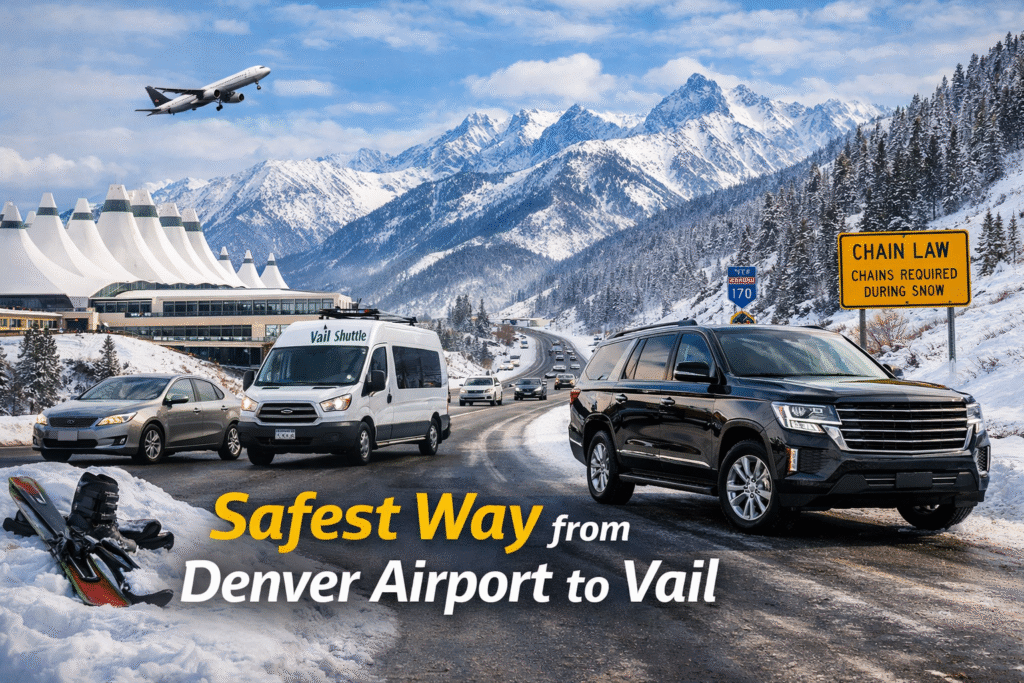
Why this topic matters
Safety matters more on mountain routes than city highways.
The drive from Denver International Airport to Vail crosses high elevations.
Additionally, weather can change within minutes.
Because of that, accidents increase during snow, ice, or heavy traffic.
Choosing the right transport reduces stress and risk.
Common challenges or questions travelers have
Travelers usually ask the same questions before booking.
However, many answers online stay vague.
Here are the most common concerns:
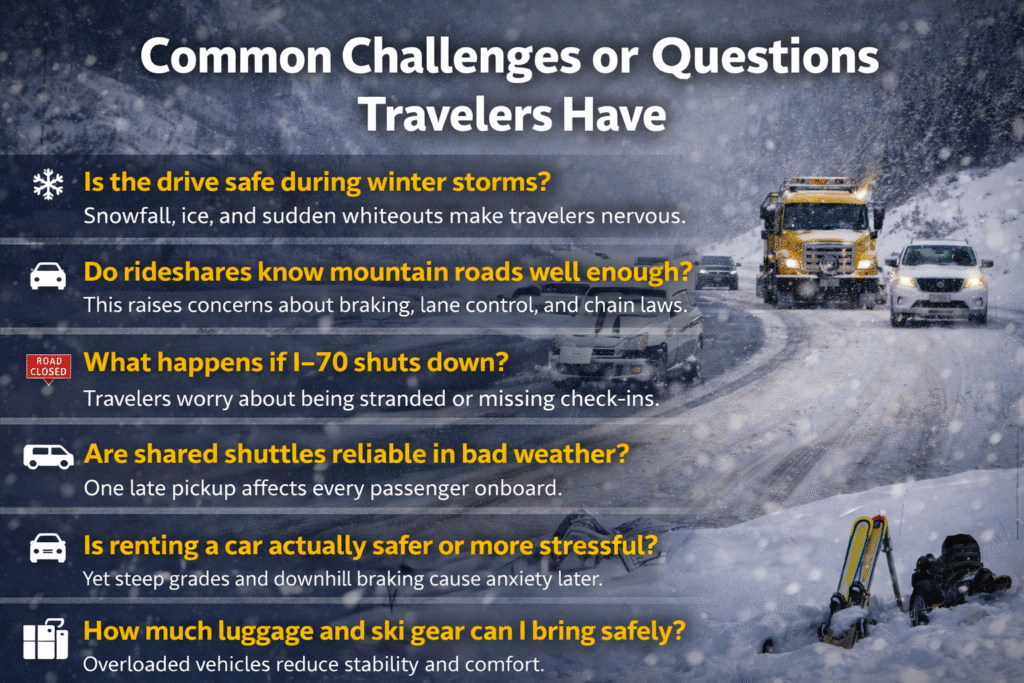
- Is winter driving dangerous on I-70?
- Are rideshares reliable in snowstorms?
- Do shuttles handle luggage and skis well?
- Which option feels safest for families?
- How do costs compare without hidden fees?
Understanding these points helps you avoid bad surprises.
Understanding winter travel safety on the Denver–Vail route
Why winter travel safety matters here
Winter travel safety becomes critical between November and April.
Snowfall can exceed several inches per hour.
Moreover, black ice often forms in shaded canyon sections.
Chain laws also activate without much notice.
Drivers unfamiliar with mountain driving often panic.
Mountain driving realities travelers underestimate
Mountain driving demands experience and preparation.
Braking distances increase on downhill grades.
Meanwhile, wind gusts can push lighter vehicles.
In addition, wildlife crossings add another hazard at night.
Experienced local drivers know how to adjust speed early.
Comparing transportation options for a safe airport transfer to Vail
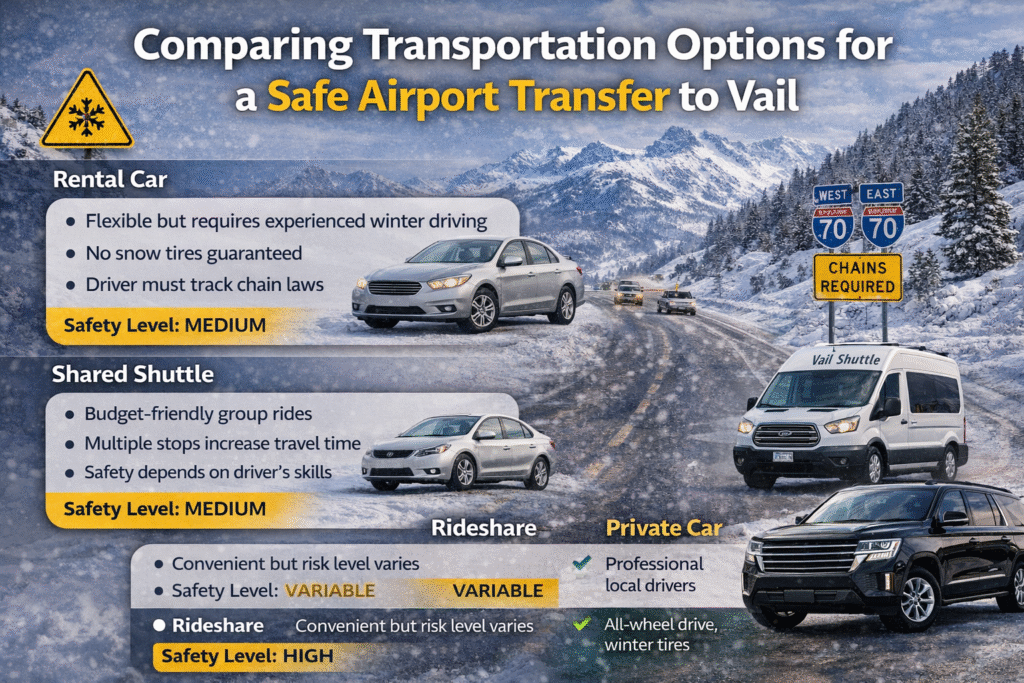
Rental cars and self-driving
Rental cars feel flexible at first.
However, most visitors lack winter mountain driving experience.
All-wheel drive helps, yet it does not guarantee control.
Moreover, rental companies rarely provide snow tires.
One mistake on I-70 can cause long delays.
Shared shuttles
Shared shuttles cost less than private options.
However, safety depends on schedules and conditions.
Stops increase travel time and fatigue.
Additionally, delays affect everyone onboard.
Space for luggage and skis can feel tight.
Rideshare services
Rideshare drivers vary widely in experience.
Some know mountain routes well.
Others rely fully on GPS.
Moreover, availability drops during storms or late hours.
That uncertainty worries many travelers.
Why private car service in Vail offers the highest safety level
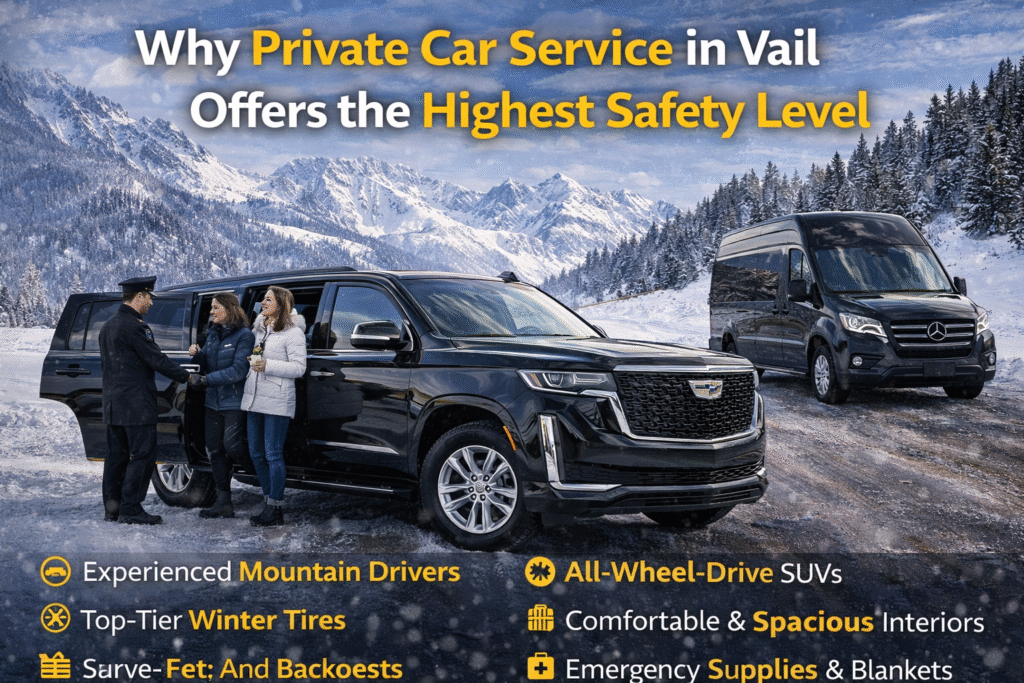
Professional drivers with mountain expertise
A private car Vail service uses trained chauffeurs.
They drive these routes daily.
Therefore, they anticipate hazards before they appear.
They also follow weather updates closely.
This preparation improves overall safety.
Properly equipped vehicles
Luxury SUVs and Sprinter vans handle winter roads better.
Most fleets use all-wheel drive.
Additionally, vehicles carry emergency supplies.
Snow tires or winter-rated tires add traction.
Comfort and control improve together.
Cost, time, and comfort comparison
| Option | Safety Level | Travel Time | Comfort | Weather Reliability |
|---|---|---|---|---|
| Rental Car | Medium | 2.5–4 hrs | Medium | Low in storms |
| Shared Shuttle | Medium | 3–5 hrs | Medium | Moderate |
| Rideshare | Variable | 2.5–4 hrs | Medium | Unpredictable |
| Private Car Service | High | 2.5–3 hrs | High | Excellent |
This table shows why travelers often upgrade for peace of mind.
Why private transportation is the safest way from Denver Airport to Vail

Private transportation removes many risk factors.
You avoid unfamiliar driving decisions.
You also avoid crowded vehicles.
Moreover, your driver adjusts routes proactively.
That combination creates the safest overall experience.
Expert tips from mountain travel professionals

Experienced drivers share consistent advice.
First, avoid late-night arrivals during storms.
Second, monitor chain law alerts early.
Third, allow buffer time for weather delays.
Finally, choose drivers with local knowledge.
These tips come from years of mountain operations.
What travelers should avoid on this route
Avoid underestimating winter conditions.
Avoid choosing the cheapest option blindly.
Also, avoid tight connection schedules.
Never assume clear weather means a clear road.
Planning conservatively keeps trips safe.
When to choose private luxury transportation instead of public transport
Comfort and reduced fatigue
Mountain travel already demands focus.
Private vehicles reduce mental strain.
Heated seats and quiet cabins help recovery.
This matters after long flights.
Safety for families and groups
Families need space and stability.
Car seats fit better in private vehicles.
Moreover, luggage stays secure.
Parents gain peace of mind.
Weather reliability during peak season
Storms disrupt public schedules quickly.
Private services adjust faster.
They communicate delays clearly.
Reliability improves safety.
A realistic traveler scenario
Imagine landing after a long winter flight.
Snow starts falling heavily.
Rental counters feel chaotic.
Meanwhile, traffic slows on I-70.
A private driver meets you curbside.
They load luggage efficiently.
They choose a safer alternate route.
You arrive calm and rested.
That difference matters.
How to book and what to expect

Booking stays simple with professional services.
First, choose your vehicle type.
Second, confirm flight details.
Third, receive driver contact information.
Finally, enjoy door-to-door service.
Near the end of your planning, remember to Book private luxury transportation from Denver Airport (Escalade, Suburban & Sprinter available) for maximum safety.
Frequently Asked Questions (FAQ)

Is driving from Denver Airport to Vail dangerous in winter?
The route becomes risky during snowstorms.
Experienced drivers reduce that risk significantly.
What is the safest way Denver Airport to Vail for families?
Private car services offer the best safety and comfort balance.
Are shuttles safe during heavy snowfall?
They can operate safely, yet delays increase.
Does private car service cost much more?
Costs rise, yet safety and reliability increase greatly.
How long does the drive usually take?
Expect 2.5 to 3 hours in good conditions.
Do private cars handle ski equipment well?
Yes, larger vehicles provide secure storage.
A safer ending to your mountain journey
Choosing transportation affects your entire trip.
Safety influences comfort, timing, and peace of mind.
While many options exist, only one consistently minimizes risk.
Plan smartly, respect mountain conditions, and travel confidently.