
Winter travel Denver to Vail is one of the most searched mountain routes during ski season.
However, many travelers worry about snow, visibility, and road safety.
At the same time, flights land daily in snowy conditions without delay.
So the real question becomes preparation, transportation, and timing.
This guide explains real risks, smart choices, and expert-backed solutions.
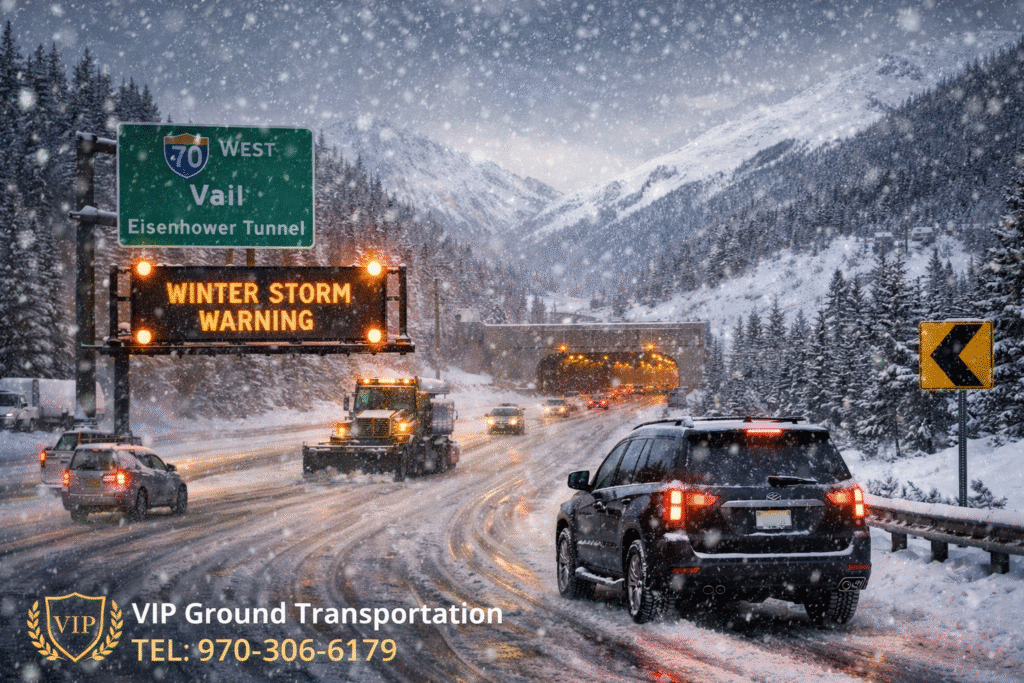
Why This Topic Matters for Winter Travelers
Denver to Vail is not a normal highway drive.
Instead, it crosses high-altitude mountain passes.
Meanwhile, winter storms arrive quickly in the Rockies.
Every year, thousands of tourists face:
- Heavy snowfall on I-70
- Sudden whiteout conditions
- Road closures and chain laws
- Slow-moving traffic after storms
Therefore, understanding winter airport transfer safety is essential.
More importantly, smart transportation choices reduce risk dramatically.
Common Challenges Travelers Face in Snow Travel Denver Vail
Winter driving in Colorado looks easy online.
In reality, conditions change within minutes.
The most common problems include:
- Slippery mountain curves
- Black ice in shaded areas
- Poor visibility during snowfall
- Long delays after accidents
- Limited cell service in passes
Additionally, rental cars often lack snow tires.
As a result, many travelers underestimate mountain weather driving risks.
How Mountain Weather Affects Winter Travel Denver to Vail
Snow storms do not behave like city snowfall.
Instead, they intensify at higher elevations.
Key weather factors include:
- Sudden temperature drops
- Wind-driven snow drifts
- Freezing fog near tunnels
- Rapid ice formation
Furthermore, storms may hit Vail while Denver remains clear.
Because of this, many travelers feel unprepared halfway through the trip.
Professional drivers monitor mountain forecasts constantly.
Private transportation companies adjust routes in real time.
That difference alone improves snow road safety significantly.
Private Winter Airport Transfer vs Driving Yourself
Driving might seem cheaper initially.
However, real costs appear during storms.
Let’s compare realistically:
| Factor | Self Driving | Private Winter Transfer |
|---|---|---|
| Snow tires | Usually extra | Included |
| Weather monitoring | Your responsibility | Professional |
| Stress level | High | Low |
| Delay handling | You wait | Driver adjusts |
| Safety experience | Limited | Trained pros |
| Mountain driving skill | Often low | High |
Clearly, comfort and safety rise with professional service.
Why Professional Transportation Is the Best Winter Choice

Private winter travel is not about luxury alone.
It is about preparation, training, and real-time decisions.
Here’s why experts recommend it:
- Vehicles equipped for snow conditions
- Drivers trained in mountain weather driving
- Live traffic and storm monitoring
- Flexible routes during closures
- Safe spacing and braking techniques
Additionally, larger vehicles handle icy roads better.
Escalades, Suburbans, and Sprinters offer strong traction and stability.
That directly improves snow road safety.
Expert Tips for Safe Snow Travel Denver Vail

Transportation professionals follow proven winter protocols.
Smart safety practices include:
- Leaving before storms peak
- Using snow-rated tires only
- Keeping extended following distance
- Avoiding hard braking on curves
- Monitoring CDOT updates constantly
- Choosing alternate mountain routes when needed
Moreover, experienced drivers understand avalanche zones.
They slow down where ice forms frequently.
These details make a major difference.
What Travelers Should Avoid in Winter Storm Conditions
Many accidents happen due to poor decisions.
Avoid these common mistakes:
- Driving rental cars without snow tires
- Following GPS blindly during closures
- Speeding downhill on icy slopes
- Driving at night during storms
- Waiting too long after snowfall
Additionally, never assume plows cleared everything.
Ice remains long after snow disappears.
Trust professionals who know mountain roads daily.
When Private Luxury Transportation Makes the Most Sense
Some situations demand extra safety and comfort.
Choose private winter transfer when:
- Traveling with family or kids
- Carrying ski equipment and luggage
- Arriving late at night
- Storms are predicted
- You want zero stress
Benefits include:
- Heated interiors
- Spacious seating
- Secure luggage storage
- Smooth winter driving
- Door-to-door service
This is especially helpful after long flights.
Real Travel Scenario: Storm Night From Denver to Vail
Imagine landing at Denver Airport at 6 PM.
Snow begins falling heavily.
Traffic slows near the foothills.
Several vehicles slide off the road.
Rental drivers panic.
Some turn around.
Meanwhile, a professional chauffeur reroutes early.
They track road closures live.
The vehicle maintains steady speed.
Chains are ready if needed.
Two hours later, you arrive safely in Vail.
No stress.
No fear.
That is the real difference.
How to Book and What to Expect

Booking private winter transportation is simple.
Typical process:
- Choose your vehicle size
- Enter flight details
- Confirm pickup time
- Receive driver contact info
- Enjoy smooth transfer
Drivers monitor flight delays automatically.
Pickup adjusts if your flight changes.
Near the end of your trip, remember to use:
Book private luxury transportation from Denver Airport (Escalade, Suburban & Sprinter available)
Frequently Asked Questions (Schema Ready)
Q1: Is winter travel Denver to Vail dangerous?
Winter travel can be risky during storms.
However, professional transportation greatly reduces danger.
Q2: Are roads usually closed during snowstorms?
Sometimes major storms cause temporary closures.
Professional drivers monitor closures in real time.
Q3: Can rental cars handle mountain snow conditions?
Most rentals lack snow tires.
This increases risk significantly in winter weather.
Q4: Do private drivers use snow chains?
Yes, when legally required.
They carry equipment and know proper installation.
Q5: How long does the drive take in winter?
Normally two hours.
During storms, it may take longer.
Professional routing helps reduce delays.
Q6: Is private transportation worth the cost?
Yes for safety, comfort, and stress reduction.
Many travelers say it’s the best decision.
Q7: Do drivers track weather constantly?
Yes.
They monitor forecasts, traffic, and closures live.
Your Smooth Mountain Journey Starts With Smart Choices
Winter travel through Colorado’s mountains can be magical.
However, storms change everything quickly.
While driving yourself may seem simple, risks rise fast.
Meanwhile, professional winter airport transfer keeps you safe.
From snow road safety to comfort, the difference is clear.
Your mountain adventure should begin relaxed, not stressed.
