

road closure airport transfer : Everything goes according to plan until an unforeseen circumstance arises.
In just a few minutes, an unexpected road restriction at an airport can cause tension.
There are set schedules for flights.
Highways don’t, though.
Major roadways can be abruptly blocked by snow, accidents, and construction.
What actually occurs, then, when highways close while you’re traveling to and from the airport?
Above all, how can you safeguard your timetable and mental tranquility?
What to expect is explained in detail in this guide.
It also demonstrates how actual emergency travel plans and real-time winter road condition monitoring are used by professional transportation providers to handle snow road closure transportation crises.
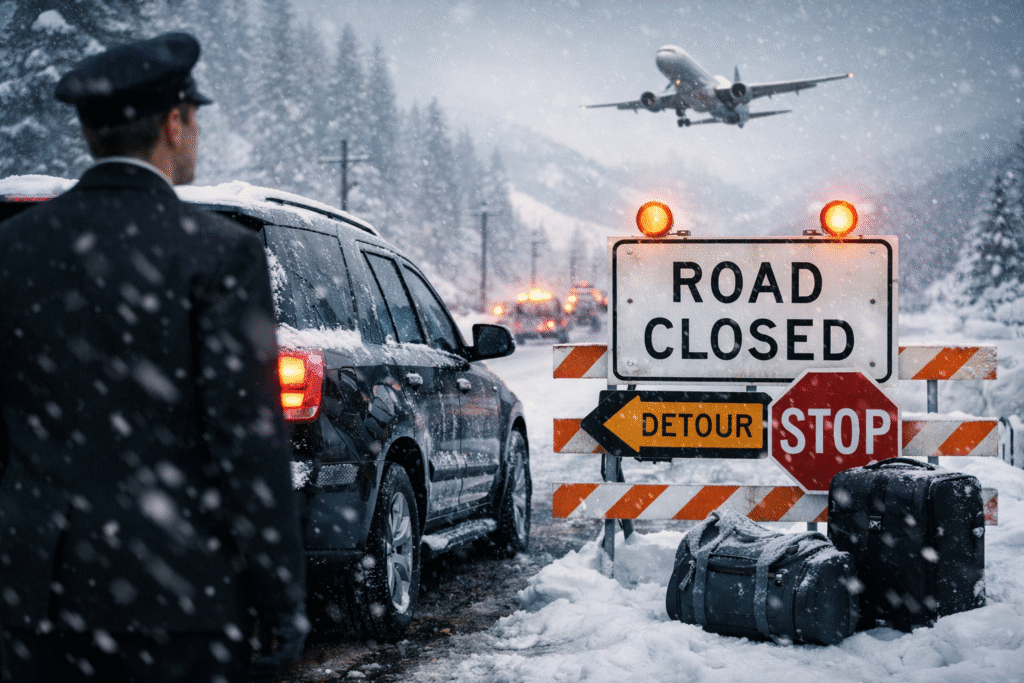
Why This Topic Matters
Until an unexpected event occurs, everything proceeds as planned.
An unforeseen road restriction at an airport can create anxiety in a matter of minutes.
Flight timetables are predetermined.
But highways don’t.
Snow, accidents, and construction can all cause sudden closures of major roads.
Therefore, what really happens when roads close on your way to and from the airport?
Most importantly, how can you protect your schedule and mental health?
This guide provides a detailed explanation of what to expect.
It also shows how professional transportation providers deal with snow road closure transportation problems by using real-time winter road condition monitoring and actual emergency travel plans.
When closures happen, travelers face three risks:
- Missed flights
- Rebooking fees
- Stress and uncertainty
Therefore, understanding how a professional service handles a road closure airport transfer helps you make informed decisions.
Common Challenges Travelers Have
The majority of passengers believe that drivers just “figure it out.”
But reality is more nuanced.
Here are the most frequent concerns:
- Will I miss my flight?
- Who monitors winter road conditions?
- Does the driver know alternative routes?
- Will I be charged extra?
- What if the closure lasts hours?
Additionally, travelers using rideshare apps often face cancellation during heavy snow.
Drivers may avoid dangerous routes.
Unfortunately, apps rarely offer structured emergency travel plans.
That difference matters.
How Professional Services Handle Road Closure Airport Transfer Situations
Real-Time Route Monitoring
Professional operators monitor traffic software continuously.
They also check state alerts and law enforcement updates.
Most high-end companies use:
- GPS fleet tracking
- Live traffic analytics
- Airport arrival monitoring
- State road closure feeds
As a result, drivers receive rerouting instructions instantly.
Built-In Buffer Time
Skilled airport transfer providers incorporate time buffers into their schedules.
Against unexpected winter road conditions, this barrier provides protection.
Additionally, during storms, drivers frequently leave earlier.
Multi-Route Planning
Dispatchers determine at least two backup routes prior to departure.
They might move to Highway 6 or other corridors if I-70 closes.
The type and intensity of closure, however, determine the precise path.
Communication With the Passenger
Passengers are advised by professional services.
If there are any changes to the journey time, you will be informed.
Stress is greatly decreased by clear communication.
Snow Road Closure Transportation: What Makes It Different?
Winter closures differ from construction delays.
They can last hours.
Sometimes, authorities close mountain passes completely.
Specialized Vehicles Matter
Luxury airport transfer fleets often include:
- AWD SUVs
- Snow-rated tires
- Chains during heavy storms
- Heated cabins
For example:
| Vehicle Type | Snow Capability | Ideal For |
|---|---|---|
| Cadillac Escalade | AWD + stability control | Families & luggage |
| Chevy Suburban | High clearance | Mountain routes |
| Sprinter Van | Group travel | Corporate transfers |
Proper equipment dramatically reduces risk.
Driver Training
Experienced chauffeurs receive winter driving training.
They understand mountain terrain and snow road closure transportation protocols.
Additionally, they know when to stop and wait safely.
That expertise cannot be replaced by navigation apps.
Emergency Travel Plans: What Professionals Actually Do
When closures occur, professionals activate structured plans.
Step 1: Immediate Assessment
Dispatch checks closure length and estimated reopening.
They compare alternate routes.
Step 2: Time Calculation
They calculate:
- Remaining distance
- Traffic buildup
- Airport check-in deadlines
Step 3: Passenger Consultation
If risk increases, they contact the passenger.
Options are explained clearly.
Step 4: Adjusted Strategy
They may:
- Take a longer but open route
- Increase driving speed within safety limits
- Coordinate with airline if delay becomes severe
This systematic response protects your schedule.
Cost, Time, and Comfort Comparison
Below is a realistic comparison during severe winter road conditions:
| Factor | Rideshare | Shuttle Bus | Private Luxury Transfer |
|---|---|---|---|
| Route Monitoring | App-based | Limited | Dedicated dispatch |
| Snow Preparedness | Driver dependent | Moderate | Fleet-level planning |
| Flexibility | Low | Fixed schedule | Fully adjustable |
| Communication | Minimal | Delayed | Direct & proactive |
| Comfort | Varies | Crowded | Spacious & heated |
Although private transfers cost more, they offer greater predictability during a road closure airport transfer scenario.
Why Private Airport Transfers Are the Smartest Option During Closures
First, reliability increases dramatically.
Second, communication improves.
Third, vehicles are winter-ready.
Moreover, private providers focus on one client at a time.
They do not juggle multiple stops like shuttles.
During snow road closure transportation events, that single-client focus matters most.
Tips From Transportation Experts
Professionals recommend:
- Depart 30–60 minutes earlier during storms
- Check official state road alerts
- Avoid last-minute ride bookings in winter
- Confirm driver snow experience
- Choose AWD vehicles for mountain routes
Additionally, monitor airport updates through official channels.
For example, airlines update delay information via Federal Aviation Administration systems.
Planning ahead reduces emergency pressure.
What Travelers Should Avoid
Honesty builds trust.
So here is what not to do:
- Do not rely solely on weather apps
- Do not book the cheapest option during storms
- Do not assume highways stay open
- Do not leave at the last possible minute
Additionally, avoid switching drivers mid-trip.
Consistency ensures better decision-making.
When to Choose Private Luxury Transportation Instead of Public Transport
Comfort
Luxury SUVs provide heated seating and quiet cabins.
Stress decreases significantly.
Safety
Professionally maintained vehicles outperform average rentals.
Moreover, experienced drivers handle winter road conditions calmly.
Family Travel
Children need space and stability.
Car seats fit securely in larger SUVs.
Luggage Capacity
Airport travel often includes heavy bags.
Private vehicles accommodate skis, snowboards, and equipment easily.
Weather Protection
You avoid standing outdoors waiting for buses.
Door-to-door service improves comfort.
If your schedule is tight, private transfer becomes the safer choice.
A Realistic Scenario: Winter Closure on I-70
Imagine this.
You are flying internationally from Denver.
Snow begins overnight.
Authorities suddenly close a major highway section.
Your driver receives alerts instantly.
Dispatch reroutes using a secondary corridor.
Departure time adjusts earlier.
Meanwhile, a rideshare driver cancels multiple trips nearby.
Passengers scramble to rebook.
However, your private transfer continues smoothly.
You arrive on time.
Stress stays minimal.
That difference reflects planning, not luck.
How to Book and What to Expect
Booking a reliable airport transfer is simple.
- Choose vehicle type
- Provide flight details
- Confirm pickup location
- Receive confirmation
- Get driver contact before arrival
Before your next trip, consider reserving early.
For mountain and winter travel, proactive booking ensures vehicle availability.
You can easily secure your ride here:
→ Book private luxury transportation from Denver Airport (Escalade, Suburban & Sprinter available)
FAQs -road closure airport transfer
Q1: What happens if roads close during my airport transfer?
A professional service reroutes immediately using live traffic monitoring and backup routes.
Q2: Will I be charged extra for detours?
Policies vary. However, reputable companies explain potential changes clearly before proceeding.
Q3: Are private drivers trained for snow road closure transportation?
Yes. Experienced chauffeurs receive winter driving training and understand mountain terrain.
Q4: Should I leave earlier during winter road conditions?
Yes. Experts recommend departing at least 30–60 minutes earlier during storms.
Q5: Do airport transfers monitor flight delays too?
Yes. Professional services track arrival and departure changes in real time.
Q6: Is private transfer safer than rideshare during snowstorms?
Generally, yes. Fleet preparedness and dispatch coordination provide higher reliability.
Travel With Confidence, Even When Roads Close
Airport travel already carries pressure.
Unexpected road closures should not add chaos.
With structured emergency travel plans, professional drivers, and snow-ready vehicles, your schedule stays protected.
When reliability matters most, preparation makes the difference.
Choose transportation designed for winter road conditions.
Travel smarter.
Arrive calmer.
